
There is a point where long-range shooting stops being a matter of doing the same thing a little farther out and becomes something else entirely. Past a mile, the problem changes shape, and the shooter is no longer dealing with a familiar precision exercise scaled up to a larger distance.
That distinction matters because many experienced rifle owners already have a strong conventional long-range setup. A capable .308 or 6.5 Creedmoor rifle can perform exceptionally well inside the distances where most shooters spend their time, but extreme long-range work asks different questions of the rifle, the cartridge, the optic, and the data behind the shot.
Where Conventional Long Range Ends
For many shooters, long range means stretching out to several hundred yards and, in more serious circles, out toward 1,000 yards and beyond. Extreme long-range shooting begins where those ordinary benchmarks start to lose their usefulness, typically once distances move into the 1,500-yard range and continue past a mile.
At that point, the shooter is no longer managing a shot that reaches the target in a relatively compact and predictable window. Bullet flight time becomes long enough that conditions can evolve during the shot itself, which means the firing solution has to account not just for distance and hold, but for a changing environment that may not remain constant from muzzle to impact.
That is one of the biggest differences between conventional long range and ELR work. A shooter may read one wind condition near the firing position, another in the middle of the bullet’s path, and a third near the target, all while the projectile is still in flight.
Once flight times stretch beyond three seconds, that problem becomes more than theoretical. Wind is no longer a single correction applied before breaking the shot, but a layered variable that can shift more than once before the bullet arrives.
Why Ballistics Become Less Forgiving
As distance increases, the bullet does not simply travel farther through the same set of conditions. It also spends more time decelerating, dropping, and interacting with aerodynamic forces that may have been minor at shorter long-range distances but now become large enough to change outcomes in obvious ways.
Spin drift is a good example of that change. At ordinary distances, it may be treated as a secondary consideration, but at ELR distances it becomes part of the actual solution rather than a technical footnote.
The same is true of bullet drop and optic adjustment. Extreme-range shooting demands far more elevation travel, which is why rifles built for this role often incorporate design features such as aggressively canted bases to preserve usable optic adjustment at very long distances.
Then there is the transonic zone, which is one of the most important reasons some cartridges and projectiles remain viable at ELR while others begin to lose consistency. As a bullet transitions from supersonic to subsonic flight, airflow around it becomes less stable, and that instability can magnify every small imperfection in shape, balance, or aerodynamic design.
That is where a rifle that shoots beautifully at one set of distances may start to look far less impressive farther out. A system capable of sub-MOA precision under one condition can open up dramatically once the projectile begins to lose composure through the transition.
Why Cartridge Design Matters More Past A Mile
This is where cartridge selection stops being a matter of preference and starts becoming a matter of engineering. Shooters often debate the best long range caliber when talking about conventional precision work, but once the conversation moves beyond a mile, the question becomes more exacting because the cartridge has to support stable, predictable flight through conditions that punish compromise.
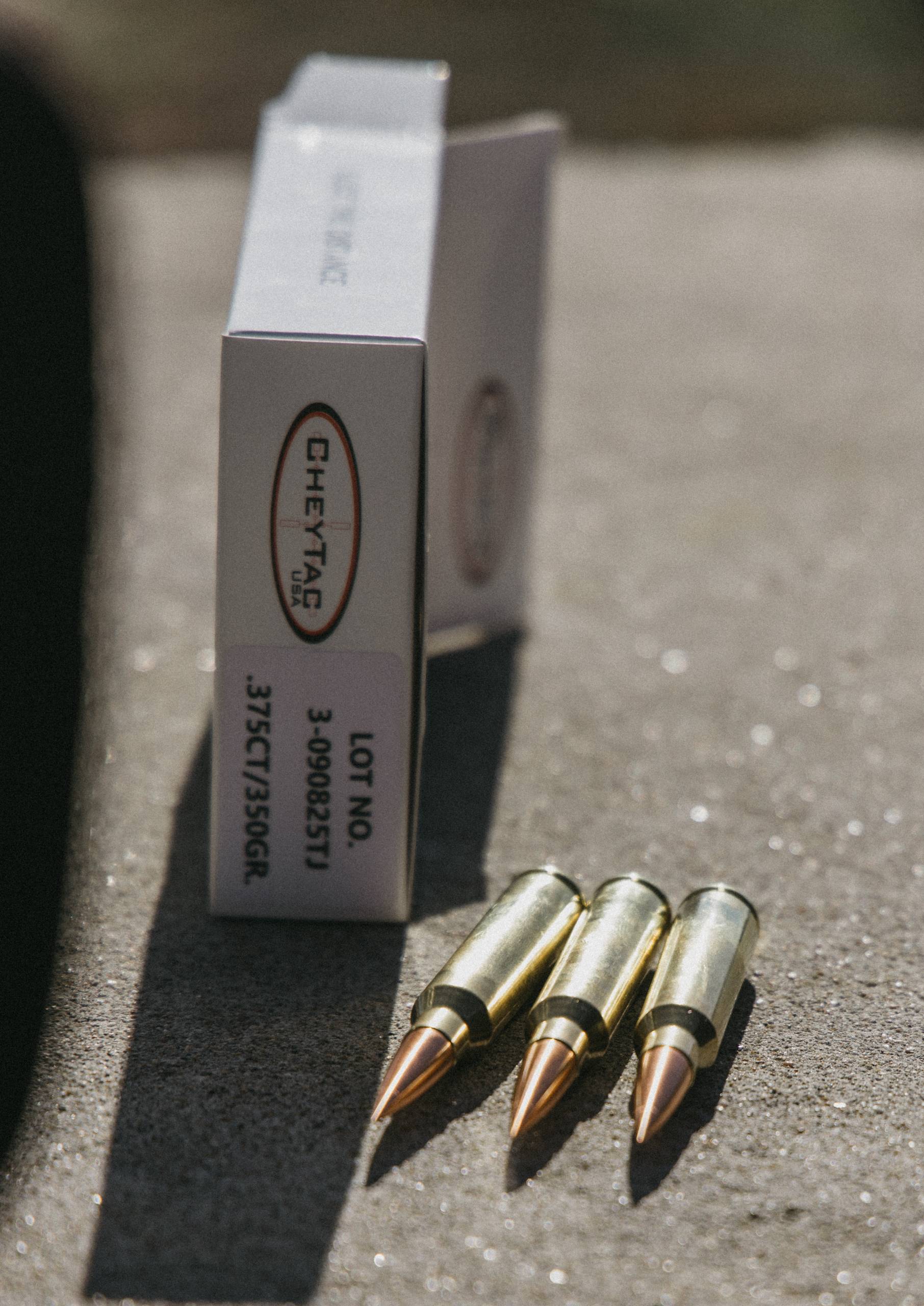
The .408 CheyTac was developed specifically around that problem. Rather than simply pushing a projectile faster and hoping energy and velocity would carry the day, the design philosophy focused on maintaining bullet stability and usable precision where conventional long-range designs begin to show weakness.
A major part of that equation is the balanced flight projectile concept associated with the cartridge. The purpose of that design is to reduce yaw and precession so the bullet stays more stable throughout its path, especially as it approaches and moves through the transonic region.
That stability matters because accuracy at ELR is not only about how the bullet leaves the barrel. It is also about whether the projectile can hold its orientation and resist destabilizing aerodynamic effects over a very long flight path where small inefficiencies compound into meaningful misses.
A cartridge designed for ELR therefore has to do more than deliver impressive numbers on paper. It has to preserve useful precision deep into the part of the trajectory where ordinary long-range assumptions start to fail.
Building A Rifle System For ELR Work
A shooter moving past a mile is not just buying more power. They are building or selecting a system that has to solve a chain of interlocking problems without introducing weak links at any point.
The rifle itself must be capable of handling larger cartridges, which means a magnum-capable action becomes part of the equation rather than an upgrade after the fact. The optic must also be chosen with real ELR requirements in mind, because a scope that works well for ordinary long-range shooting may not provide enough adjustment range to dial usable solutions at extreme distances.
Environmental data becomes just as important as the hardware. Wind, temperature, altitude, humidity, and barometric conditions all influence how the bullet behaves, and ELR shooting punishes rough guesses in a way that shorter-distance shooting often does not.
That is why ballistic computation becomes central to the process. At extreme distances, the shooter is not merely relying on experience and feel, but on a firing solution built from real environmental inputs and a rifle-cartridge combination capable of translating those calculations into repeatable performance.
What An ELR-Capable Platform Looks Like
A purpose-built ELR rifle reflects all of those realities in its design. Instead of treating extreme range as a fringe use case, it is engineered from the start around the demands of heavy-caliber precision shooting, significant elevation adjustment, and compatibility with the tools serious shooters rely on.
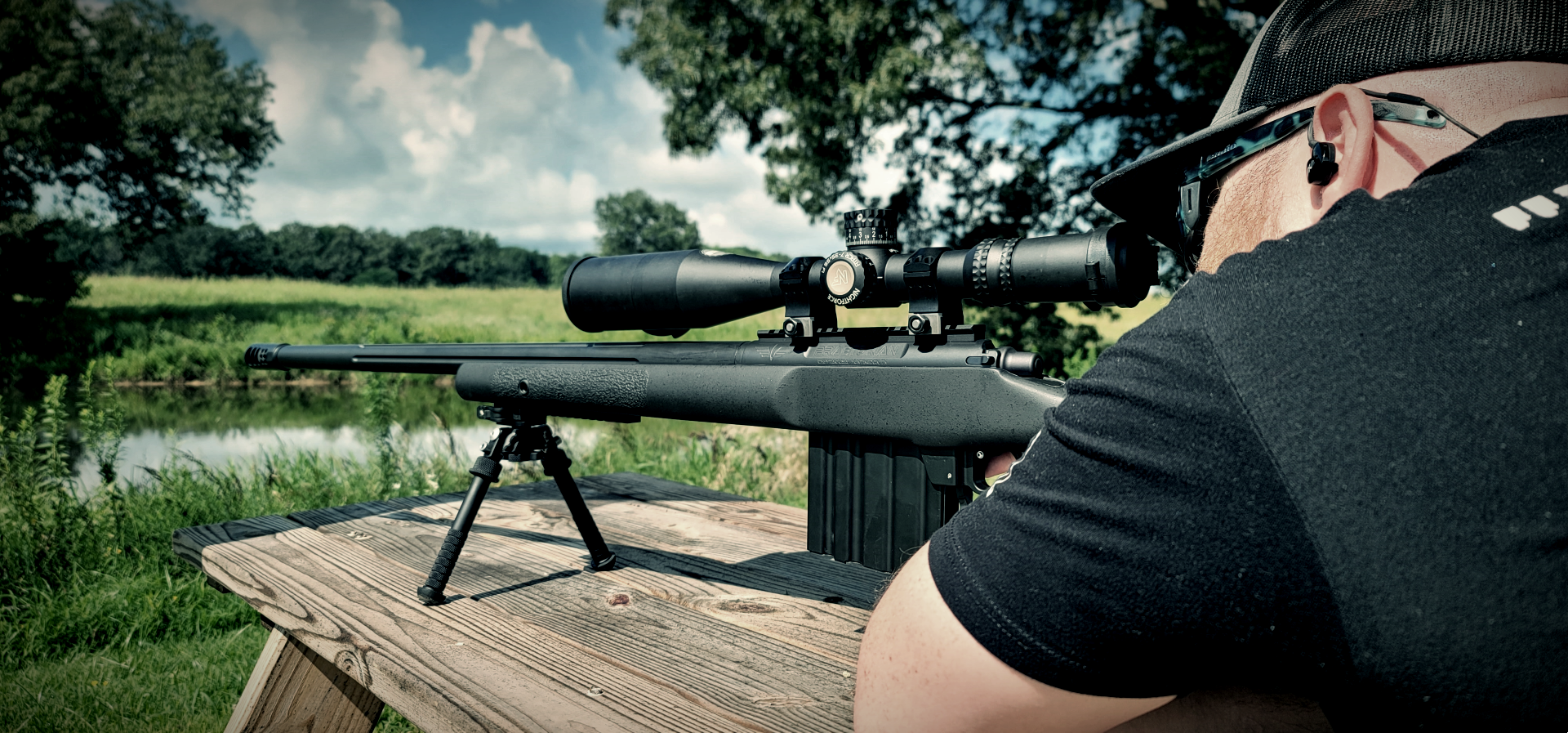
That is where a platform like the M300 Praetorian fits naturally into the conversation. Its system-level design makes sense in an article like this because it reflects the fact that ELR success depends on more than a barrel and chambering alone.
The rifle’s magnum-capable architecture gives it the foundation needed for cartridges intended for this category of performance. Its 40 MOA base addresses one of the most practical requirements in extreme-range shooting by helping preserve the optic adjustment needed to work at distances where conventional setups run out of room.
Its broader compatibility with advanced ballistic computers and suppressor-ready configurations also matters for the same reason. An ELR rifle has to function as part of a complete shooting system, and the more seamlessly it works with modern data and equipment, the more effectively it serves shooters trying to push beyond ordinary long-range boundaries.
Why Past A Mile Is A Different Discipline
Shooting past a mile is not just a harder version of long-range shooting. It is a discipline shaped by time of flight, environmental instability, transonic behavior, and equipment limitations that do not fully reveal themselves until the distances get extreme.
That is why success at ELR depends on choosing a rifle system built for the task rather than asking a conventional setup to survive conditions it was never meant to master. Shooters who want to explore what true extreme-range performance looks like should take a serious look at the purpose-built platforms available from CheyTac USA.
CheyTac USA
+17315356029
24070 US-70, Huntingdon, TN 38344