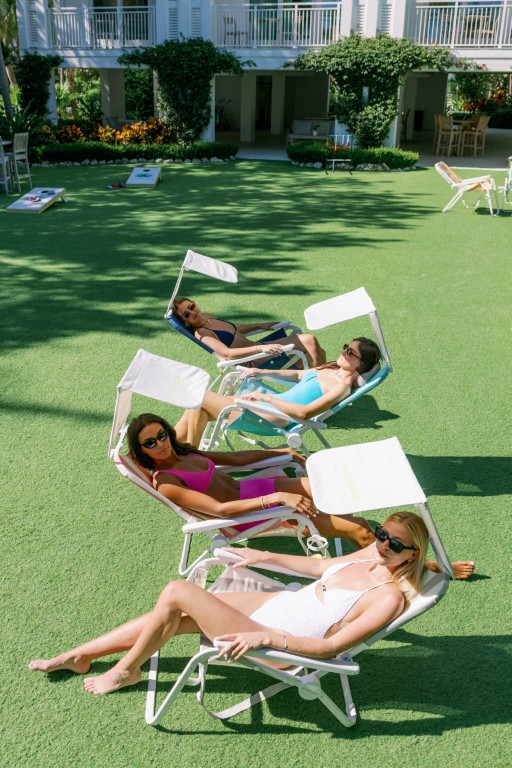
An umbrella can be positioned perfectly over a beach chair when someone first sits down. Lean the backrest into a lounging position, though, and that same patch of shade may no longer cover the upper body nearly as well.
The problem is geometric. The umbrella stays fixed while reclining moves the person’s head and torso backward relative to the shadow.
That difference barely matters on a chair designed primarily for upright seating. On a beach lounger chair, where changing the seating angle is part of the point, it can turn shade into something that needs regular adjustment.
Why Freestanding Shade Requires More Attention
A beach umbrella shades an area of sand rather than the person sitting underneath it. Once the pole is planted, the usefulness of that coverage depends on where the chair remains in relation to the shadow.
Reclining changes that relationship immediately. The upper body shifts toward a different part of the shaded area, often moving the face and shoulders closer to its edge.
The sun adds another variable over the course of the day. A setup that provided good coverage earlier in the morning may need adjustment later as the shadow moves across the sand.
That can mean shifting the chair or repositioning the umbrella. For someone who has already settled into a reclined position, maintaining coverage becomes another small task that has to be repeated throughout the day.
Wind can complicate the arrangement further. An umbrella may need to be angled or repositioned to remain stable, which can change where its shadow falls relative to the chair.
None of this means an umbrella cannot work with a lounger. It simply means two independent pieces of equipment have to remain aligned while both the seating position and outdoor conditions change.
Chair-Mounted Shade Changes The Relationship
A covered outdoor chair approaches the same problem from a different direction. Instead of establishing shade separately on the beach, the canopy mounts directly to the structure supporting the person.
When the chair is repositioned, the shade comes with it. The user no longer has to move one piece of equipment and then realign another.
SUNFLOW’s Sun Shade attaches directly to the top crossbar of compatible SUNFLOW chairs and can be angled to adjust the coverage. On the Shore Thing Chair, that places the shade within the same setup as a chair offering three seating positions.
The canopy does not eliminate the need to account for the sun. Its advantage is that its mounting point remains connected to the chair, making coverage easier to adjust when the seating position changes.
That distinction becomes particularly useful when reclining. The chair and shade can be managed together instead of treating the umbrella as a fixed point that the lounger has to remain underneath.
SUNFLOW’s Sun Shade also uses UPF 50+ fabric designed to block 98% of harmful UV rays. That matters because visible shade alone does not establish how much UV radiation the material filters.
At 13 ounces, the shade adds relatively little weight to the chair setup. When it is not needed, it can be tucked behind the chair rather than requiring another freestanding structure on the sand.
What Matters Most On A Reclining Chair
The first thing to consider with any shade solution is how closely it follows the chair. Independent shade can provide excellent coverage, but changing the chair’s position may require changing the shade position as well.
Adjustment matters for the same reason. A canopy that can be angled gives the user more control as the sun moves or the seating position changes.
Coverage also needs to be evaluated by what it protects rather than how large it looks. A broad umbrella may shade more total space, while a smaller chair-mounted canopy can be more useful when the priority is keeping the person in the seat covered.
The UPF rating provides another useful distinction. Beach shade is most effective when the material itself has been designed to filter UV rather than simply reduce visible sunlight.
Portability matters as well, particularly for someone who only needs shade over one chair. A chair-mounted canopy can provide personal coverage without requiring the user to carry and establish another major piece of equipment.
Shade Should Work With The Way The Chair Is Used
A reclining beach chair changes the position of the person sitting in it. Any shade setup has to account for that movement if it is going to remain useful throughout the day.
A freestanding umbrella can provide a larger area of coverage, making it valuable when several people or nearby belongings need shade. For a single lounger, however, maintaining that coverage may require periodic repositioning.
Attaching shade to the chair simplifies the relationship between the two. The Shore Thing Chair and Sun Shade keep seating and coverage within the same setup while still allowing both to be adjusted as conditions change.
Lounging is one of the main reasons to bring a reclining chair to the beach. The shade works better when it is designed around that movement rather than assuming the chair will stay in the same position all afternoon.